 Heritage journeys of Indochina
Tours · Laos
Luang Prabang, the Plain of Jars and Vat Phou: Laos in three listings
The royal town on the Mekong, the Iron Age jar fields of Xiengkhuang, and the mountain temple of Vat Phou in Champasak. Eight days, one long road, two flights, and the three UNESCO listings that belong to Laos alone.
At a glance
- Duration
- 8 days, 7 nights
- Party
- Private, 1 to 6 travellers
- Starts
- Luang Prabang
- Ends
- Pakse airport
- Pace
- One very long road day
- Price
- On request
Who this journey is for
Laos has four World Heritage listings, and three of them are its own: the Town of Luang Prabang, inscribed in 1995; Vat Phou and the Champasak cultural landscape, 2001; and the Megalithic Jar Sites of Xiengkhuang, 2019. The fourth, Hin Nam No, was added in 2025 as a shared extension of Vietnam’s Phong Nha-Ke Bang. Few travellers see all three of the cultural sites, because they sit at opposite ends of a long, mountainous country.
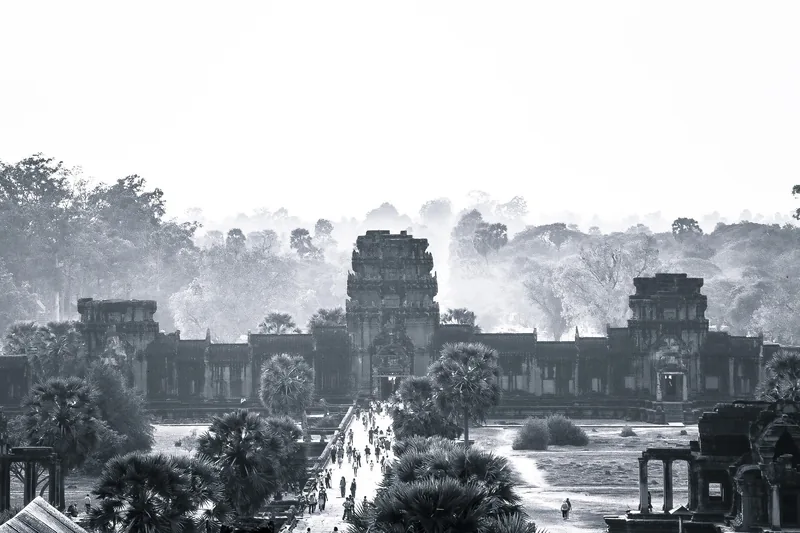
This journey is for travellers who have seen Angkor or plan to, and want the other side of the picture: Vat Phou, a Khmer temple older in its origins than Angkor Wat and linked to it by an ancient road; the jar fields, older still, from the Iron Age; and Luang Prabang, where the monasteries are not ruins but working houses of monks. It needs patience with logistics. Hotels in Phonsavan do not reach the standard elsewhere on the trip, and the flights south run on some days and not others.
Day by day
Day 1
Arrive in Luang Prabang
Transfer from the airport, about fifteen minutes, to a hotel in or beside the old town. Late afternoon walk along the Nam Khan to the point where it meets the Mekong; the whole peninsula is the UNESCO town.
Day 2
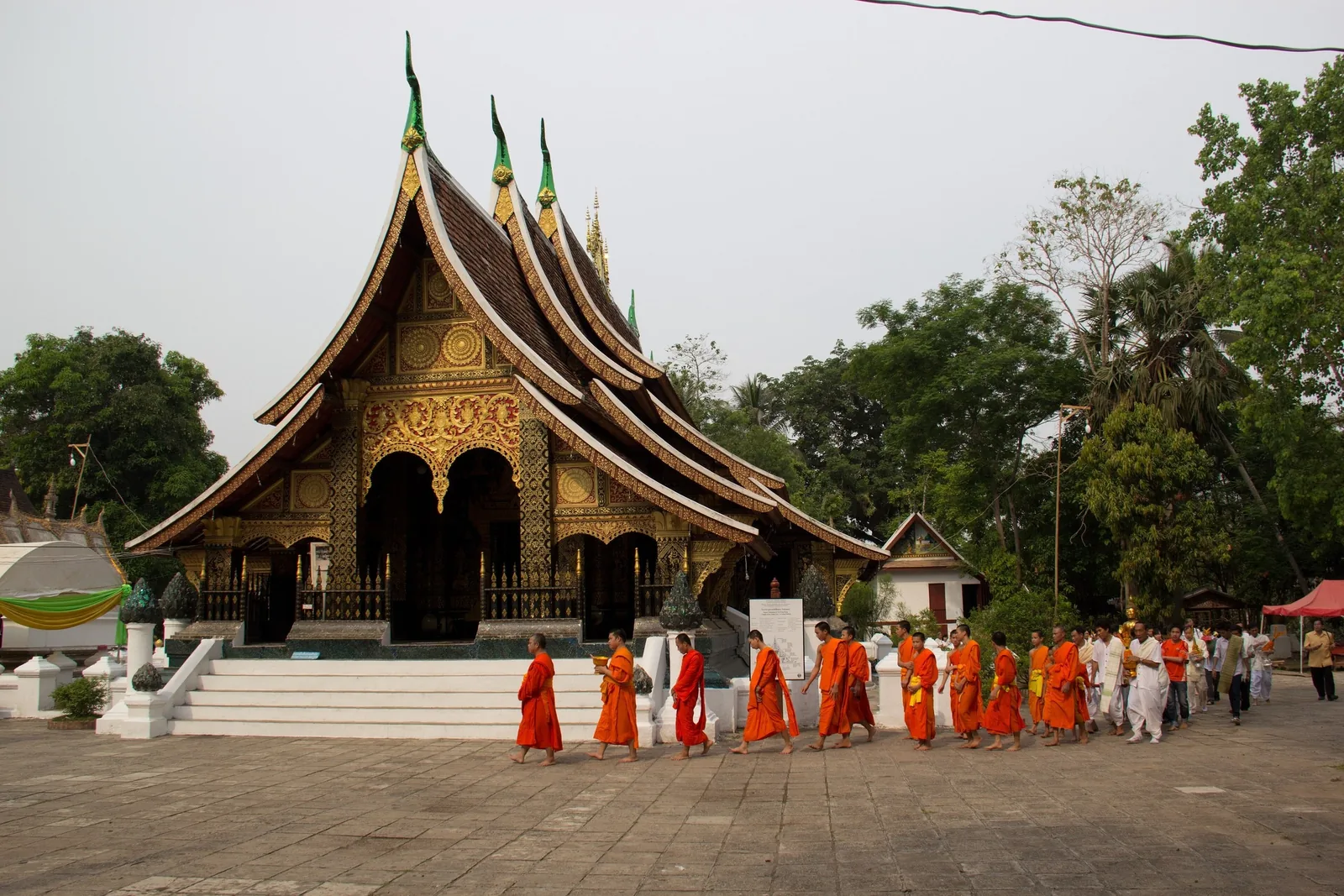
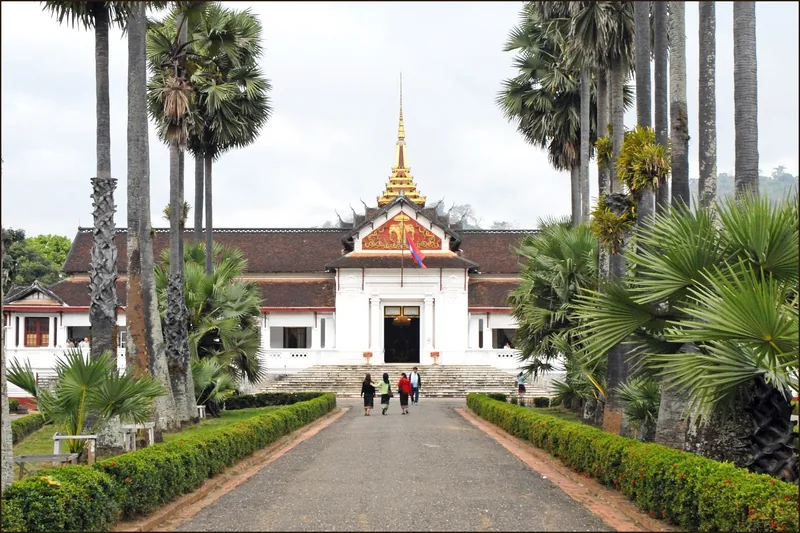
Wat Xieng Thong, the Royal Palace, Mount Phousi at dawn
Wat Xieng Thong at opening, before the tour groups
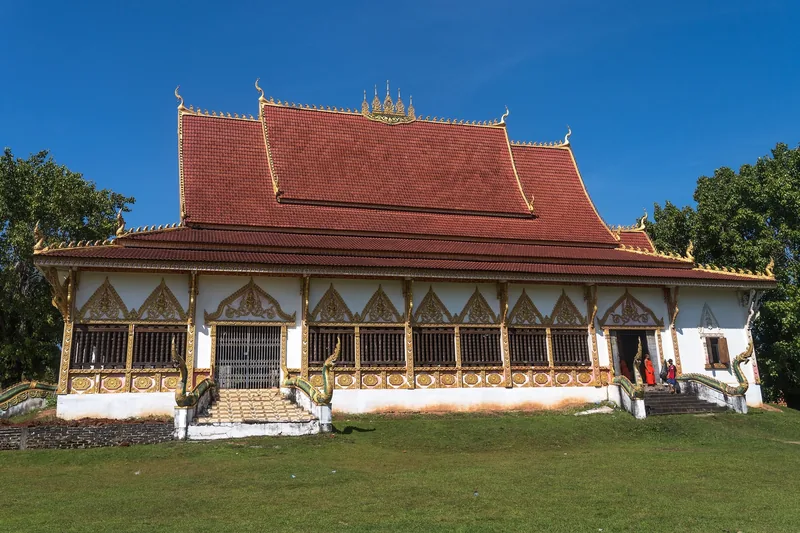
Mount Phousi at sunrise rather than sunset, when it is full. Then Wat Xieng Thong, built in the sixteenth century, its roofs sweeping almost to the ground. The Royal Palace Museum opens 08:00 to 11:30 and again 13:00 to 15:30; cover knees and shoulders, and leave bags and cameras outside. Your guide explains how Luang Prabang stayed a royal capital under the French protectorate established in 1893.
Day 3
Alms round from a distance, weavers, the river
If you wish, watch the morning alms round. It begins around 05:30 in the hot months and closer to 06:30 in the cool season. We watch from across the street, in silence, with no flash, as the Laos Tourism Board asks. After breakfast, a weaving workshop and a paper-making village across the Mekong, and an evening at the night market for food rather than souvenirs.
Day 4
The road to Phonsavan
A long day: the mountain road east to Phonsavan. Public buses take about eight hours; by private vehicle we plan seven to nine with stops at hill markets and viewpoints. This is the price of seeing the jar sites from the north, and the reason this trip has a road day at all.
Day 5
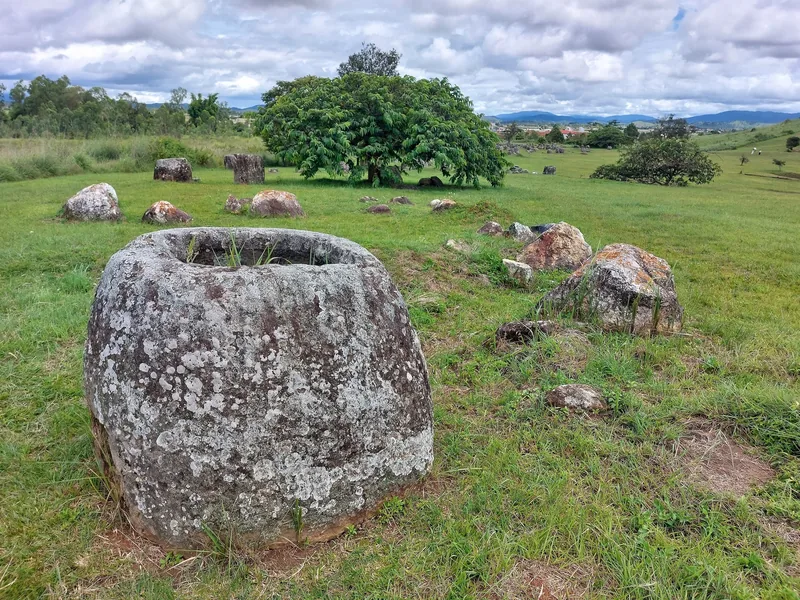
The Plain of Jars
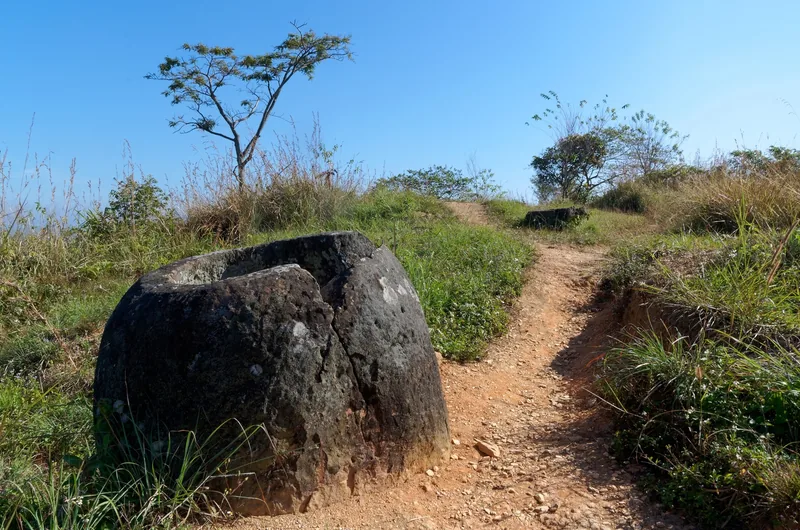
Site 1 in the first hour, mist still on the plateau
UNESCO counts more than 2,100 stone jars in 15 components, made between about 500 BCE and 500 CE and used for funerary practice. We visit three jar sites, starting with the largest at opening. Xiengkhuang was heavily bombed in the twentieth century; the jar sites have been cleared, and we keep to marked paths. Markers set by the Mines Advisory Group show cleared ground on their white side and uncleared on their red.
Day 6
Fly south to Champasak
Flight from Xieng Khouang to Vientiane, then on to Pakse, on the days the airline operates; Lao Airlines runs four to six flights a week to Xieng Khouang depending on the season. From Pakse, the road runs south to Champasak; Vat Phou lies about 40 kilometres south of Pakse. If the connections do not line up on your dates, we add a night in Vientiane and the journey becomes nine days.
Day 7
Vat Phou
The upper sanctuary before 10:00
Vat Phou opens at 08:00 and we are there for it, to climb the ceremonial stairways before the heat. UNESCO describes a planned landscape running about ten kilometres from the summit of Phou Kao, the mountain read as a linga, down to the Mekong, with the ancient cities of Shrestapura and Lingapura on the plain. Allow two to three hours. Afternoon at rest; evening on the river.
Day 8
Depart from Pakse
Transfer to Pakse airport for your onward flight, or continue south to the Mekong islands near the Cambodian border.
Prices
| Party | Deluxe rooms | Suites where available |
|---|---|---|
| Private, 2 travellers | On request | On request |
| Private, 3 – 4 travellers | On request | On request |
| Private, 5 – 6 travellers | On request | On request |
| Single traveller | On request | On request |
What the price includes
- Seven nights in the hotels named in your quote, with breakfast
- Private vehicle and driver for all road days and transfers
- An English-speaking guide in each region, with a Lao-history guide in Luang Prabang
- Flights Xieng Khouang to Vientiane and Vientiane to Pakse
- Tickets for the Royal Palace Museum, the jar sites and Vat Phou
- Lunches as listed
What it does not include
- Flights into Luang Prabang and out of Pakse
- Lao visa
- Travel insurance
- Dinners
- Drinks
- Tips
The Royal Palace Museum costs 30,000 kip according to the Laos Tourism Board; other site tickets in Laos are small sums and are included. Check before you travel. See the prices page for what moves a quote.
Gallery
Who this journey is not for
- Travellers who need the same hotel standard every night. Phonsavan cannot provide it.
- Anyone who does not want a seven-to-nine-hour road day. The alternative is flying Luang Prabang to Vientiane to Xieng Khouang, which depends on schedules we cannot promise.
- Travellers in March and April who are sensitive to smoke. Field burning in northern Laos often hazes the air and the views in those months.
- Those who want a fixed plan to the hour. Lao domestic flights change; this journey needs some flexibility.
Common questions
Questions travellers ask most
Is the Plain of Jars safe given the unexploded ordnance?
The jar sites open to visitors have been cleared, and UNESCO notes the clearance of the components. Stay on marked paths, follow the white-and-red markers, and do not pick anything up. Your guide knows the ground.
Can we take the train?
The train between Vientiane and Luang Prabang covers 238 kilometres in roughly two hours. It is useful if you start in Vientiane; tickets go on sale three days ahead through the official app or at stations.
Should we give alms ourselves?
Only if it means something to you and you follow the customs. Many visitors watch instead. If you take part, buy sticky rice at the morning market, not from the vendors on the main road.
When is the Vat Phou festival?
Around the full moon of February. It draws large crowds of pilgrims, which makes it a remarkable time to see the temple in use and a poor time to see it quietly.
Related
Read next
Tours
Tours
The four private heritage itineraries side by side.
View this journey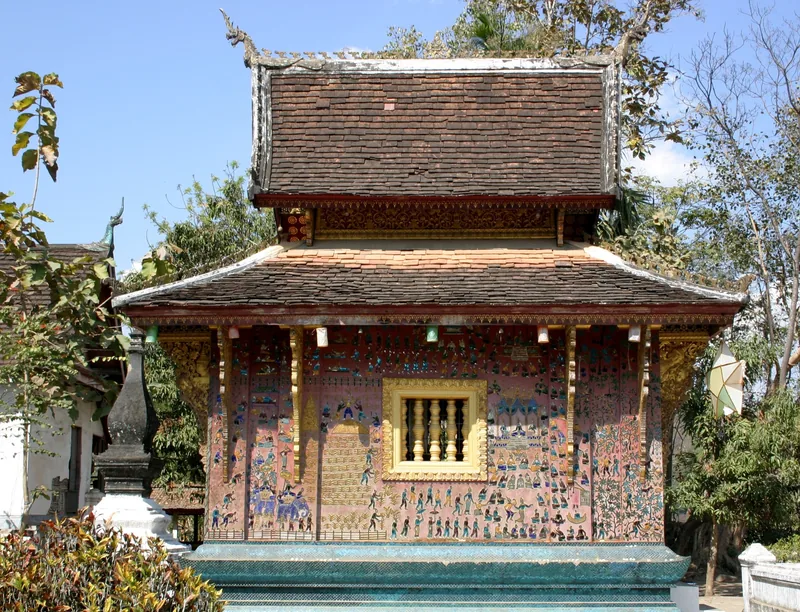
Destinations · Laos
Luang Prabang
The royal town of Luang Prabang: monasteries, museum, alms round.
View this journey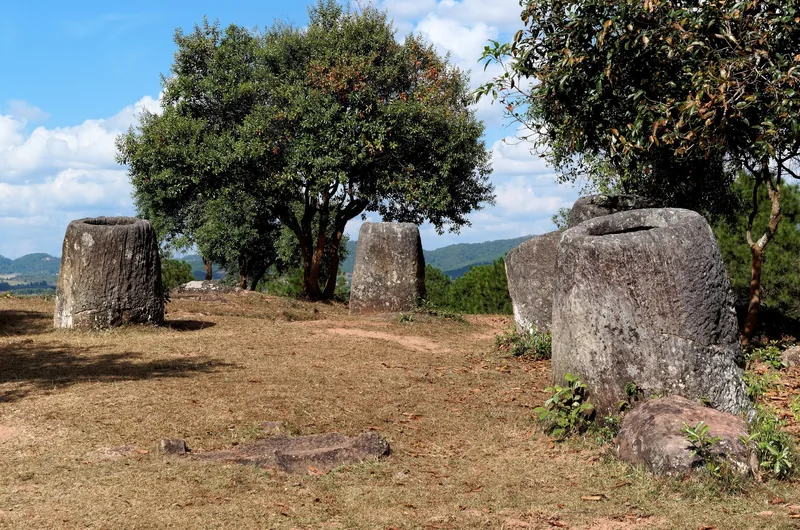
Heritage table
UNESCO heritage sites
All seventeen World Heritage properties, with years, hours and tickets.
View this journey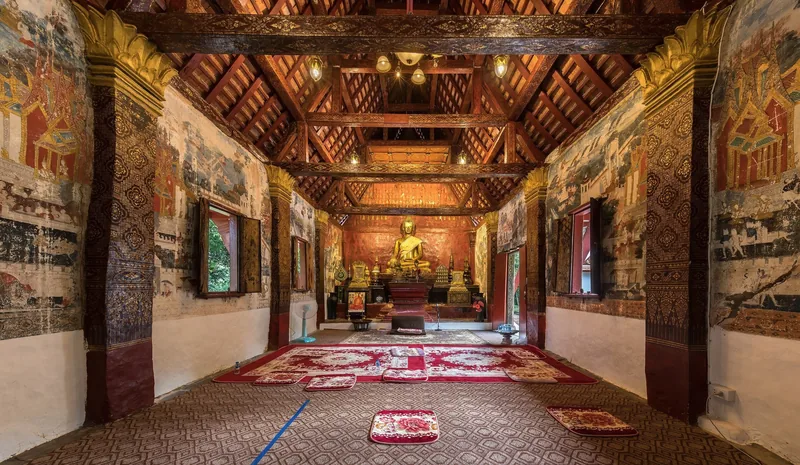
Etiquette
Temple etiquette
Dress and conduct at the religious and royal sites of the region.
View this journey
Tours · Prices
Prices
What a quote contains, what moves it, and the site tickets we can source.
View this journey
Tours · Booking
How to book
The booking process, from first form to first morning.
View this journey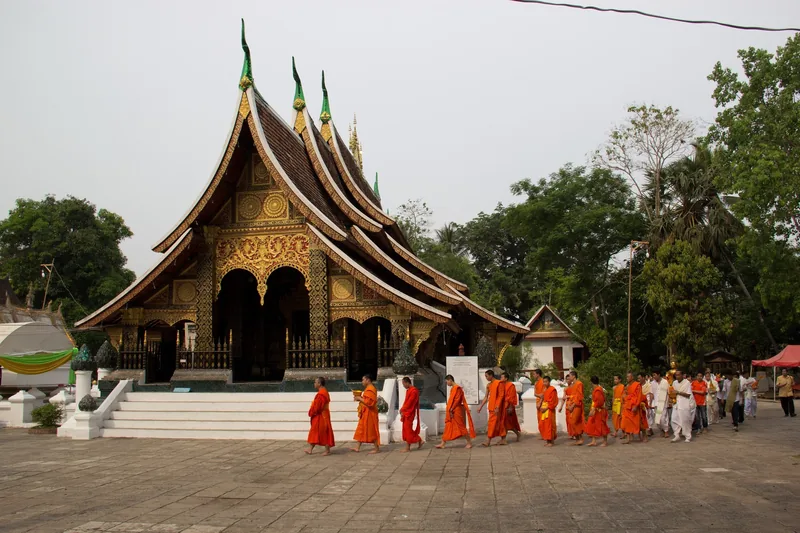
Start planning
Tell us about the trip you have in mind
Dates, party size and the places you care about are enough to start. You get a draft route and an indicative price, not a brochure.