 Heritage journeys of Indochina
Destinations · Vietnam
Hue: the last imperial capital
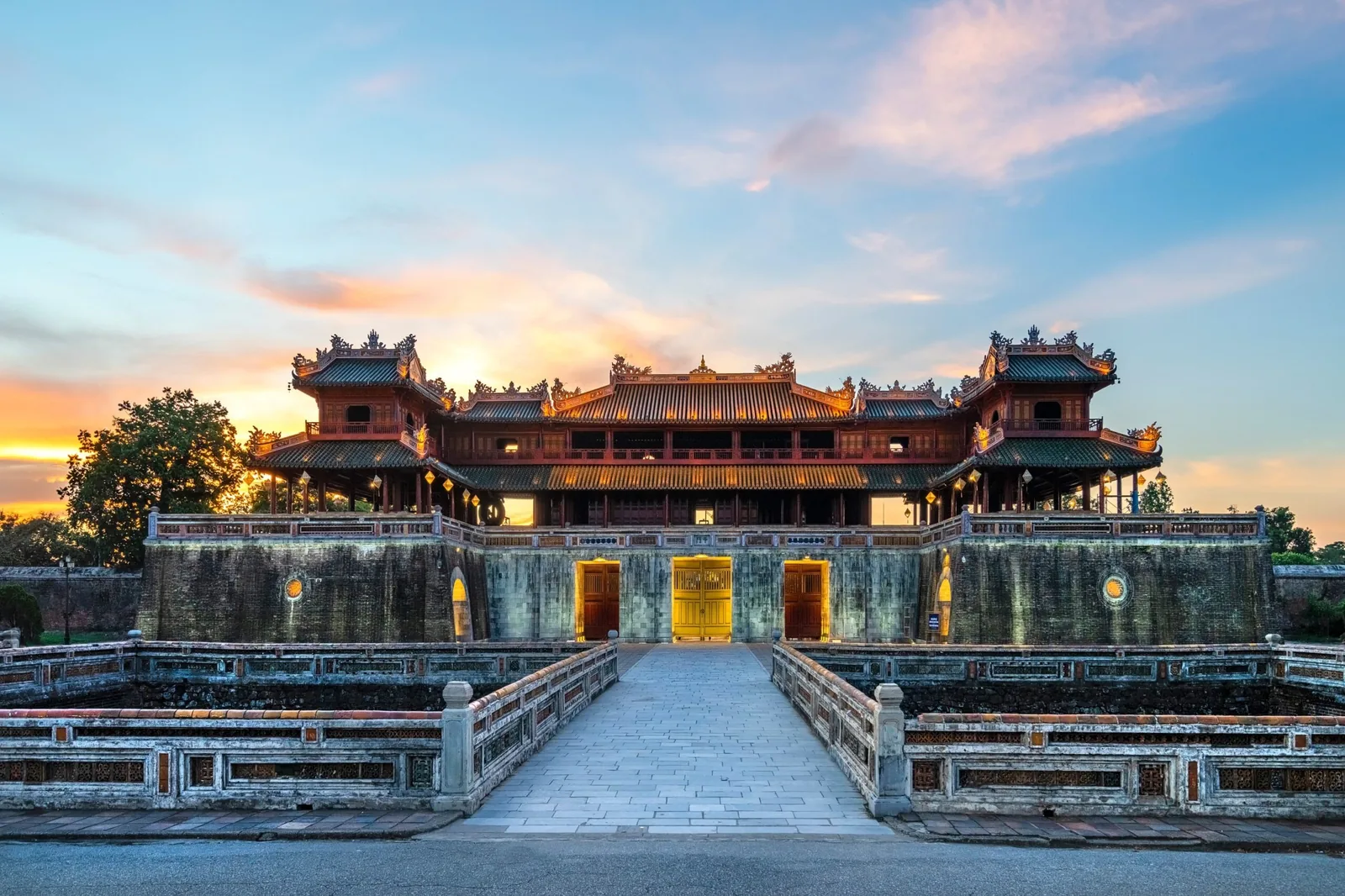
Capital of Vietnam under the Nguyen dynasty from 1802 to 1945, and the first Vietnamese site on the World Heritage List, in 1993. A walled city on the Perfume River, with the emperors’ tombs strung along the water upstream.
Hue at a glance
What Hue actually is
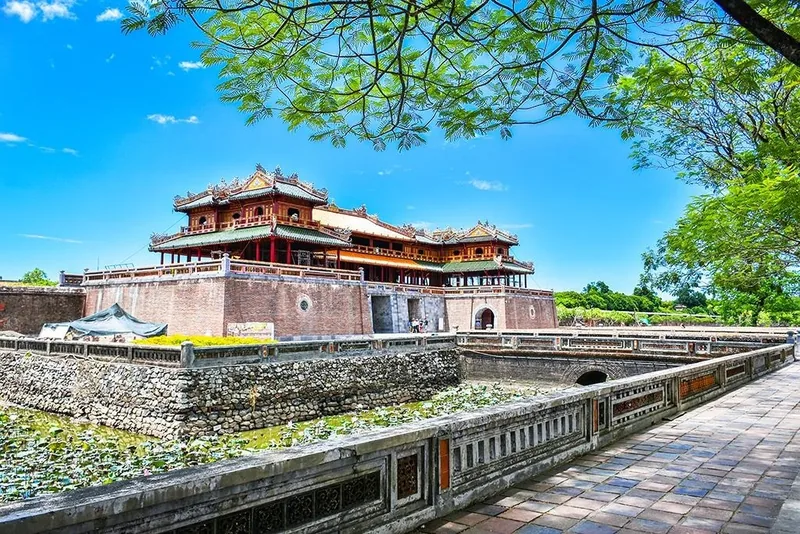
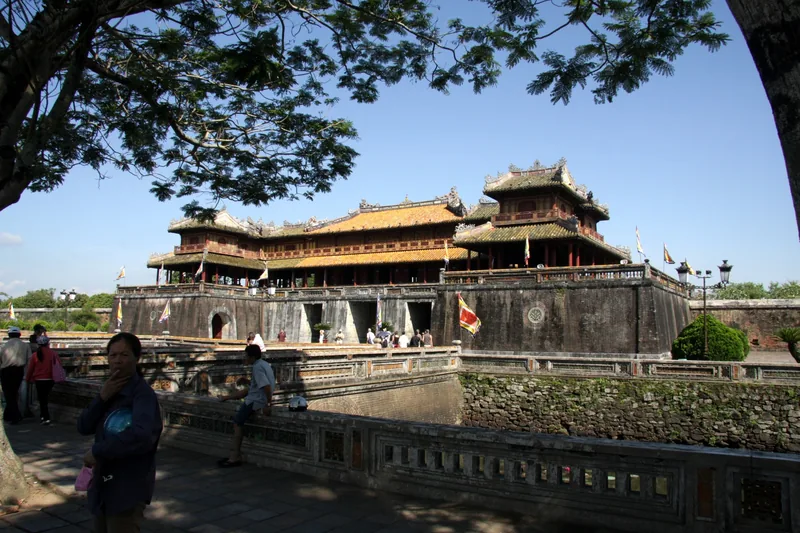
Hue is a provincial city of modest size built around a very large monument. The Capital City, the outer citadel, is a walled square on the north bank of the Perfume River, and people live inside it: there are houses, schools and markets within the walls. Inside that is the Imperial City, and inside that, what remains of the Forbidden Purple City, reserved for the emperor and his household. UNESCO describes the river winding through these enclosures, with Ngu Binh hill on the south bank acting as a protective screen.
Be ready for absence. Much of the Imperial City was destroyed in the twentieth century, and large areas are grass, foundations or recent reconstruction. Visitors who expect a Forbidden City on the scale of Beijing are disappointed. Visitors who come with a guide who can describe what stood where, and why the plan follows the five directions and the five elements, leave having understood a capital rather than looked at a ruin.
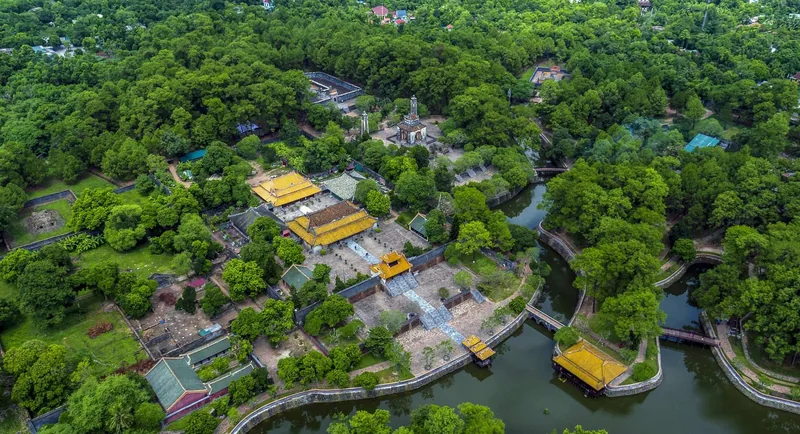
The tombs are the other half of Hue, and for many people the better half. Each emperor planned his own, and each says something about him. Minh Mang’s is a long, formal axis of courts and lakes. Tu Duc’s is a garden he used in his lifetime. Khai Dinh’s, from the twentieth century, climbs a hillside in concrete and ceramic mosaic, mixing Vietnamese and European ideas in a way some visitors find moving and others find garish.
How many nights
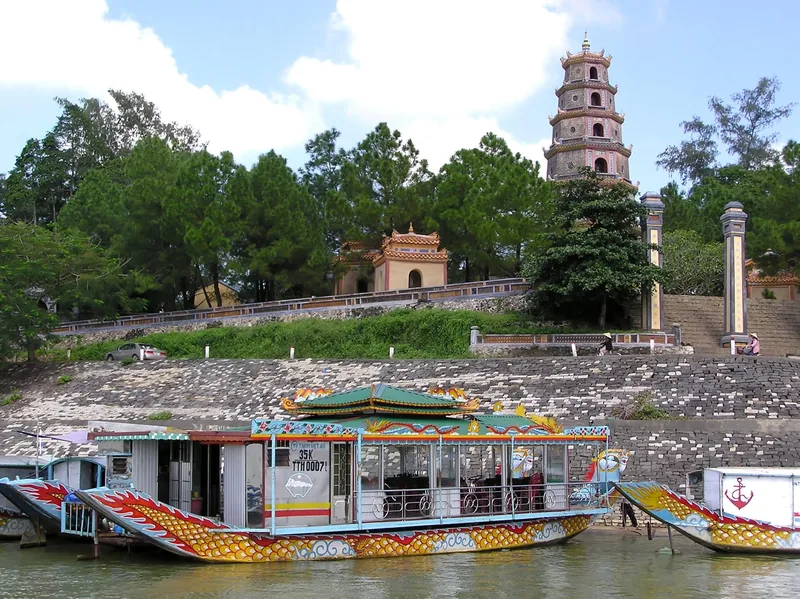
Two nights gives one morning in the Imperial City and one day for the tombs, which is the minimum that does Hue justice. Three nights adds Thien Mu pagoda, a conical-hat workshop, the court-cuisine evening and a slower pace in the heat. One night, which many itineraries allow, means the Imperial City at midday and one tomb at most, the hours when both are fullest and hottest.
When to go
3 = ideal · 2 = good · 1 = difficult. Hot from May to August; heavy rain and frequent floods in October and November; cool and often grey in December and January.
The months from February to April are the most comfortable: mild, mostly dry, and before the heat. Summer is hot but workable if you visit the citadel at 07:00 and the tombs early. October and November are the months to avoid if your dates are fixed; floods in Hue are common enough that we plan alternatives for any booking in those weeks.
Getting there
- By air: Hue Phu Bai airport has domestic flights from Hanoi and Ho Chi Minh City; the city is about 30 minutes away.
- From Da Nang: roughly 2 to 3 hours by road via the Hai Van tunnel (our estimate), longer over the pass.
- From Hoi An: about 3 to 4 hours by road with a stop, the usual way to join Hue and Hoi An on one trip.
- By train: the north–south railway stops in Hue; the stretch south to Da Nang runs along the coast.
What it costs on the ground
Site tickets, from the sources we keep on the heritage table: the Imperial City 200,000 VND per adult; the tombs of Minh Mang, Khai Dinh and Tu Duc 150,000 VND each; combined tickets for two to four sites between about 200,000 and 530,000 VND. Check before you travel. Hotels in Hue cost less than in Hoi An for a comparable room, which makes a third night here a modest addition to a trip.
Sources: Hue Top Tours — Hue entrance fees 2026 (agency source) · checked .
When to skip Hue
- If you only have one night. Spend it elsewhere and come back with two.
- If your dates fall in late October or November and cannot move. The flood risk is real.
- If ruined or reconstructed buildings do not interest you without a story. Hue is mostly story.
Hue in pictures

Journeys that visit Hue
Hue has three nights on our Imperial Hue, Hoi An and My Son week and two nights on the UNESCO Indochina fifteen days. Either can take an extra night here; it is the first place we suggest adding one.
Common questions
Questions travellers ask most
Is the Hue citadel worth it if so much was destroyed?
With a guide who can describe the plan, yes. Without one, many visitors find it a large park with a few buildings. The guide is the difference.
Which tomb should we see if we only have time for one?
Minh Mang’s, for the classic layout. If you like the unexpected, Khai Dinh’s.
Can we visit the Imperial City at night?
Evening openings and events are held on some dates. We check what runs during your stay and book it if it does.
Is Hue hot?
From May to August, very. Plan site visits for early morning and late afternoon and rest at midday.
Related
Read next
Example journey
Hue, Hoi An and My Son 7 days
A week for Hue, Hoi An and My Son, timed for the quiet hours.
View this journey
Example journey
UNESCO Indochina 15 days
Fifteen days, three countries, eight UNESCO listings, privately guided.
View this journey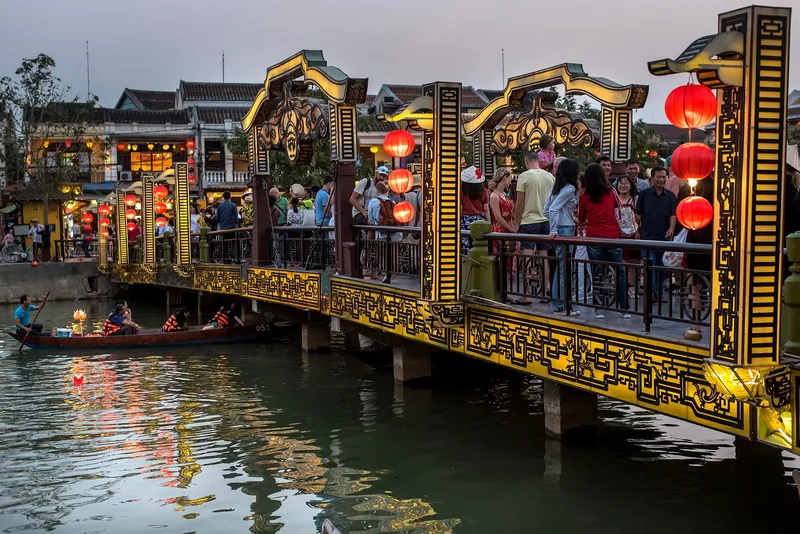
Destinations · Vietnam
Hoi An and My Son
The Hoi An trading port and the Cham towers of My Son.
View this journey
Heritage table
UNESCO heritage sites
All seventeen World Heritage properties, with years, hours and tickets.
View this journey
Etiquette
Temple etiquette
Dress and conduct at the religious and royal sites of the region.
View this journey
Destinations
Destinations
The four heritage places our journeys are built around.
View this journey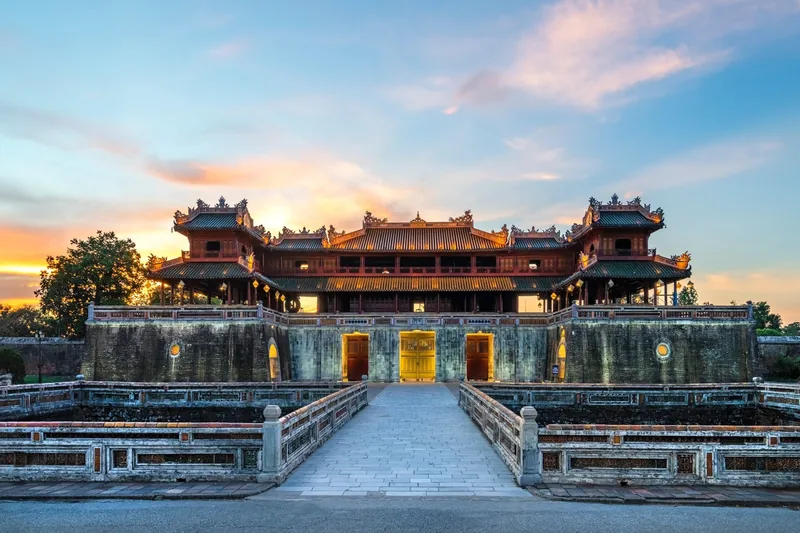
Start planning
Tell us about the trip you have in mind
Dates, party size and the places you care about are enough to start. You get a draft route and an indicative price, not a brochure.