 Heritage journeys of Indochina
Destinations · Cambodia
Angkor: six centuries of Khmer capitals
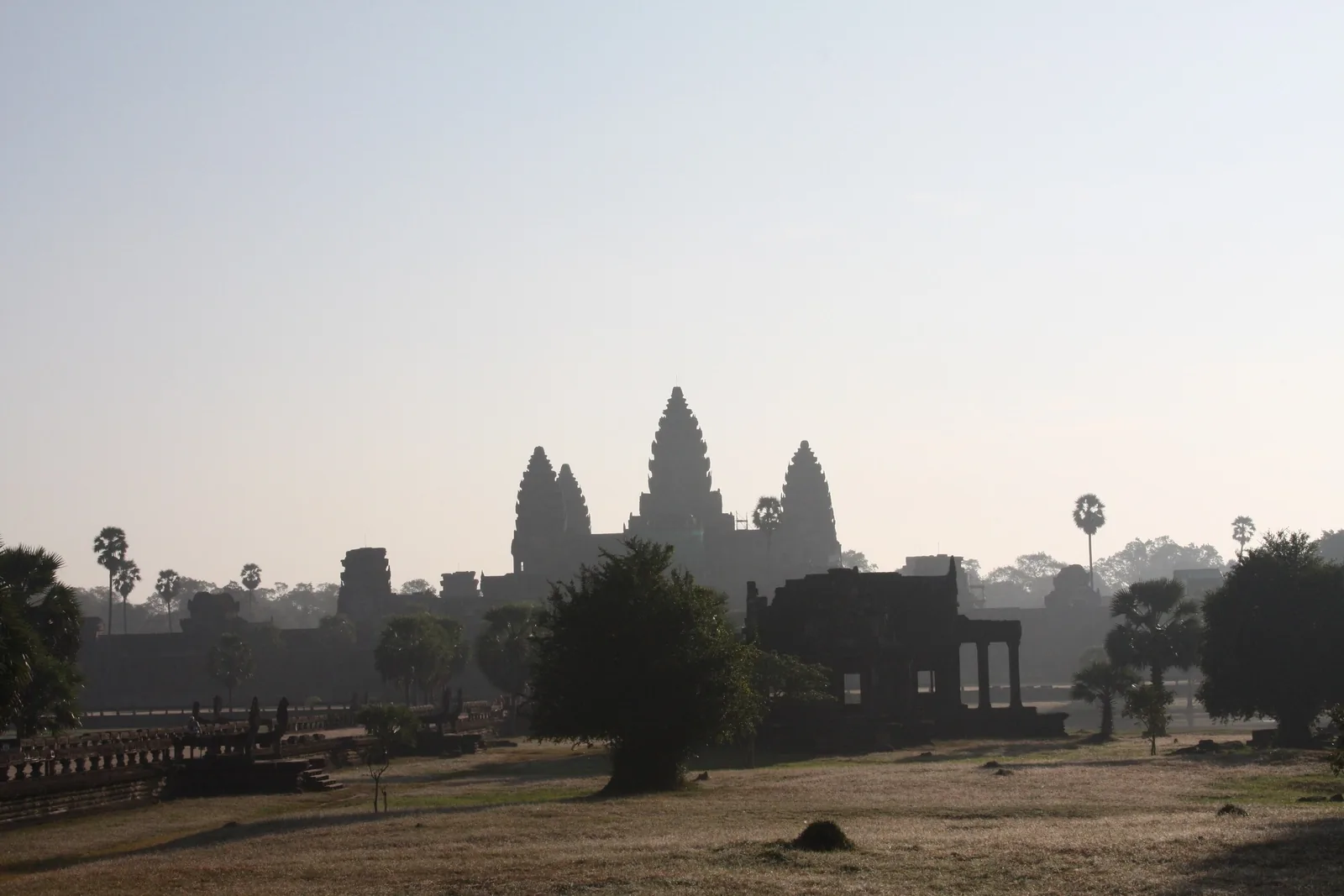
Some 400 square kilometres of temples, reservoirs and forest north of Siem Reap, built as the capitals of the Khmer Empire from the ninth to the fifteenth century. Inscribed by UNESCO in 1992, the first of the region’s listings.
Angkor at a glance
What Angkor actually is
Angkor is not one temple but a landscape of successive capitals. Each king built anew, often a state temple at the centre of a new city, and the result is a sequence spread across the plain: the ninth-century brick shrines of Roluos to the south-east, Angkor Wat of the early twelfth century, the walled city of Angkor Thom with the Bayon at its centre, and dozens of temples in between. More than 100,000 people still live inside the protected area, in over a hundred historic settlements, according to UNESCO.
Two things surprise first-time visitors. One is scale: the distances between temples are measured in kilometres, and you will spend real time in a vehicle. The other is the crowd. Angkor Wat at sunrise, Ta Prohm in mid-morning and the Bayon at most times are busy. UNESCO itself notes that tourism, while an enormous economic potential, can also generate irreparable destruction. The cure is timing: the quiet windows are real, and predictable, and a guide who knows the park uses them.
Angkor was on the List of World Heritage in Danger from its inscription in 1992 until 2004, when international conservation work led to its removal. Several of the restoration teams that did that work are still active, and some temples you visit will have scaffolding.
How many nights
Three nights gives two full temple days: Angkor Wat, Angkor Thom, Ta Prohm and Banteay Srei, the temples everyone means. Four or five nights adds the Roluos group, Preah Khan, the less-visited eastern temples and a long day to Sambor Prei Kuk or Koh Ker, and lets you rest through the midday heat instead of pushing on. Two nights, the common minimum, means one long day and the crowded hours.
When to go
3 = ideal · 2 = good · 1 = difficult. Dry and cooler November to February; very hot in April and May; green and wet from June to October, with fewer visitors.
November to February is the comfortable season and the busy one. March to May grows steadily hotter; April is the hardest month for long temple days. The wet season, from June to October, brings afternoon rain, green moats and fewer visitors, and is a reasonable time to go if you can plan around the showers.
Getting there
- By air: Siem Reap’s international airport has flights from Bangkok, Ho Chi Minh City, Hanoi and other regional hubs; routings from Da Nang and Luang Prabang vary by season. Allow about an hour into town.
- Passes: buy the Angkor Pass at the official ticket office on Street 60 or through Angkor Enterprise, the government’s official sales channel.
- To Sambor Prei Kuk: about 2.5 to 3 hours each way by road.
What it costs on the ground
| Angkor Pass | Price |
|---|---|
| One day | USD 37 |
| Three days | USD 62 |
| Seven days | USD 72 |
| Children under 12 | Free, with passport |
Sambor Prei Kuk has its own ticket, USD 10. Phnom Kulen is ticketed separately. Check before you travel. Siem Reap has a wide range of hotels, and deluxe rooms here cost less than in Luang Prabang or Hoi An for a similar standard.
Sources: Angkor Enterprise — official Angkor Pass sales; Visit-Angkor.org — pass prices and opening hours (agency source) · checked .
When to skip Angkor
- If you can only give it one day. You will see Angkor Wat and the Bayon with everyone else; save it for a trip with three nights.
- If heat is a medical concern and your only dates are April or May.
- If you cannot manage stairs at all. The famous views mostly involve steep steps, though much of the park is on the level.
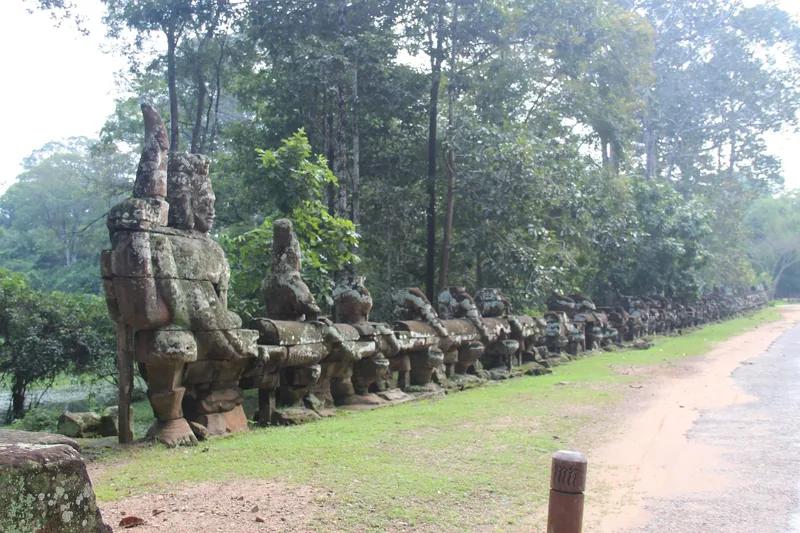
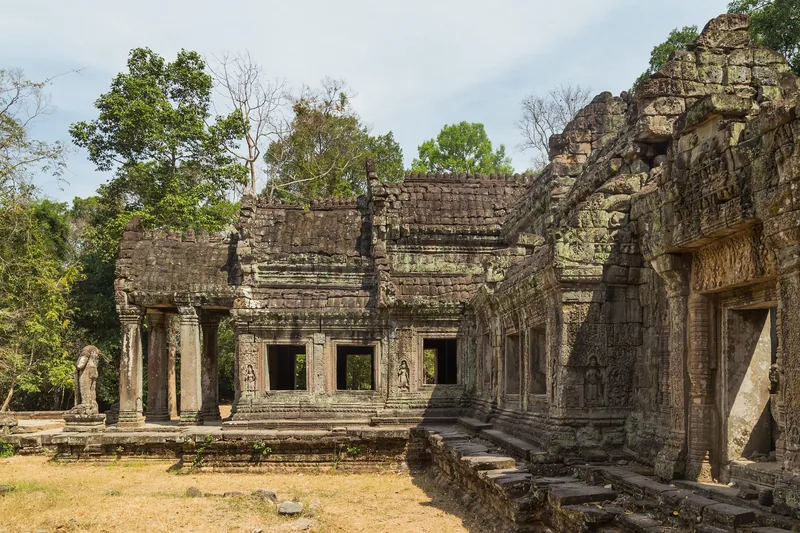
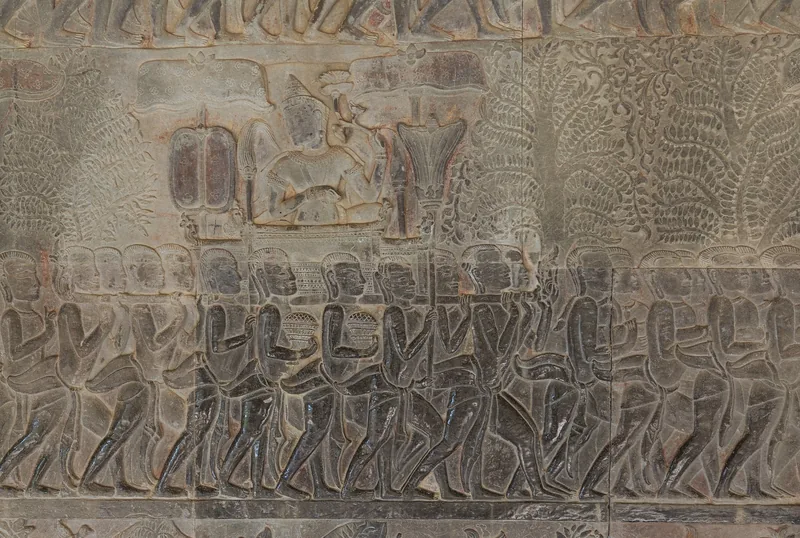
Angkor in pictures
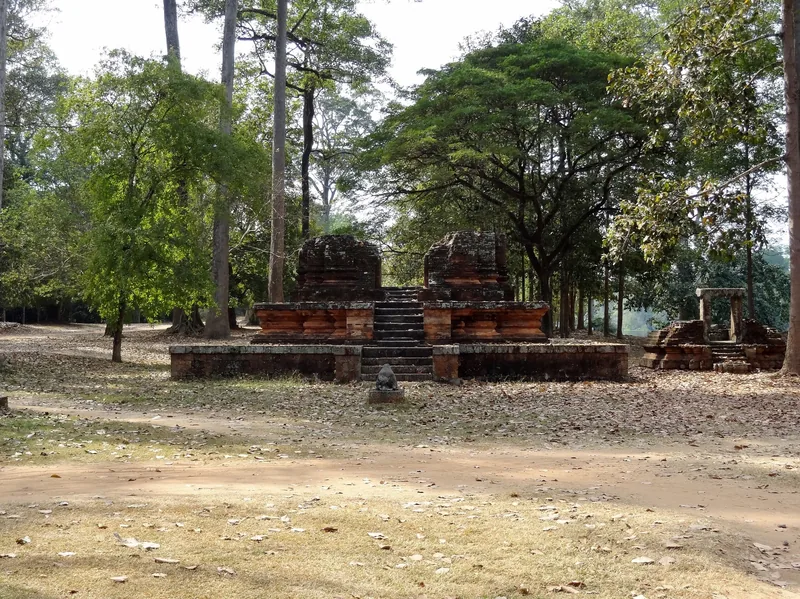
Journeys that visit Angkor
Five nights and four temple days on Angkor in depth and Sambor Prei Kuk; three nights on the UNESCO Indochina fifteen days. For dress and conduct rules at the temples, read our temple etiquette guide before you go.
Common questions
Questions travellers ask most
Is the three-day pass enough?
For most visitors, yes. If you plan four temple days, the seven-day pass costs only a little more.
Are drones allowed at Angkor?
Not without written permission from the APSARA National Authority, which manages the park.
What should we wear?
Cover shoulders and knees. Shorts, tank tops and skirts above the knee are considered disrespectful under the visitor code of conduct, and the upper levels of some temples enforce it.
Is sunrise at Angkor Wat worth it?
It is the classic view of Angkor and the busiest hour at the temple. Srah Srang at sunrise and Angkor Wat at about 08:00 is our suggestion.
Related
Read next
Example journey
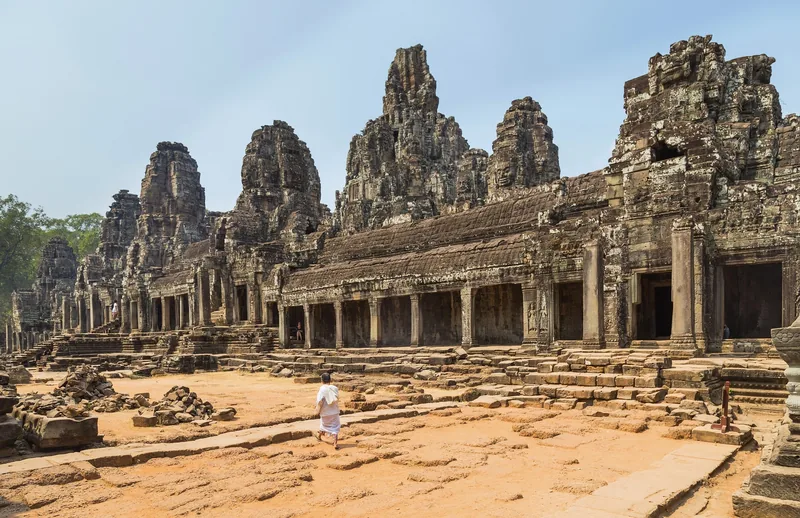
Angkor and Sambor Prei Kuk 6 days
Five nights at Angkor and a day at pre-Angkorian Sambor Prei Kuk.
View this journey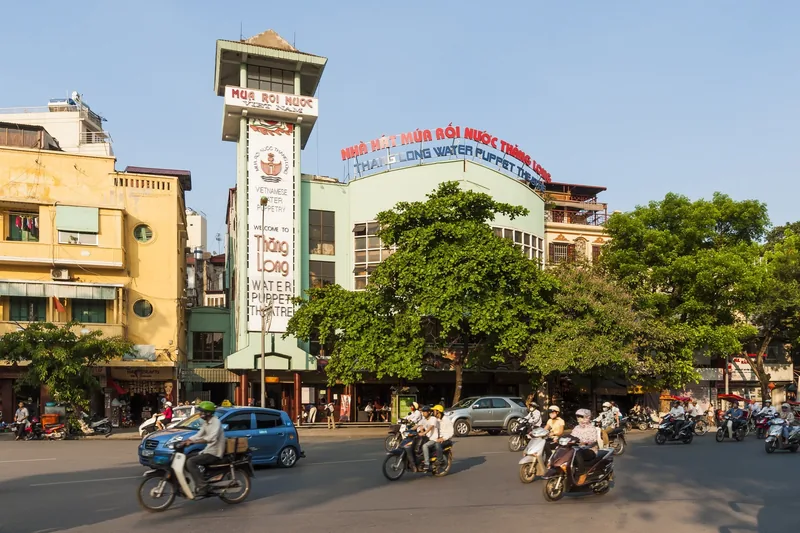
Example journey
UNESCO Indochina 15 days
Fifteen days, three countries, eight UNESCO listings, privately guided.
View this journey
Heritage table
UNESCO heritage sites
All seventeen World Heritage properties, with years, hours and tickets.
View this journey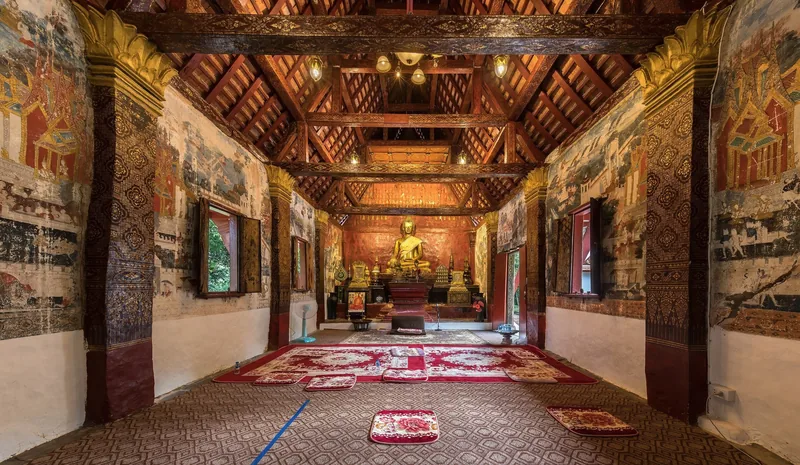
Etiquette
Temple etiquette
Dress and conduct at the religious and royal sites of the region.
View this journey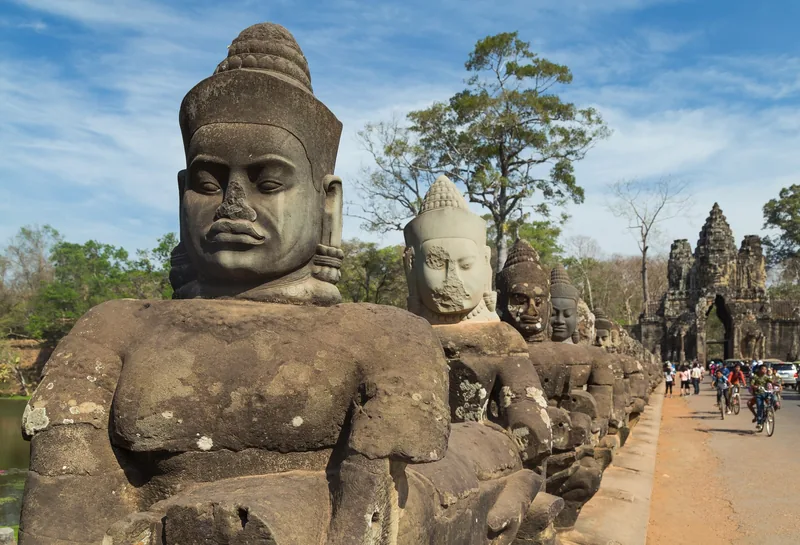
Tours · Prices
Prices
What a quote contains, what moves it, and the site tickets we can source.
View this journey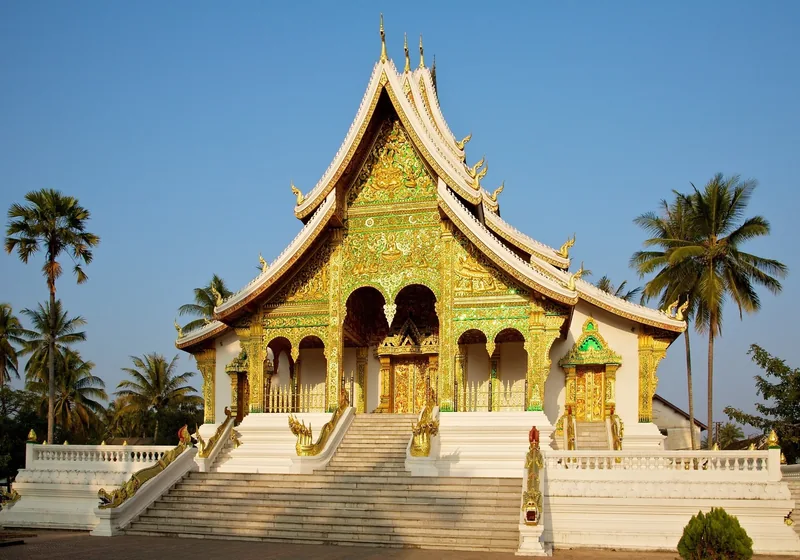
Destinations
Destinations
The four heritage places our journeys are built around.
View this journey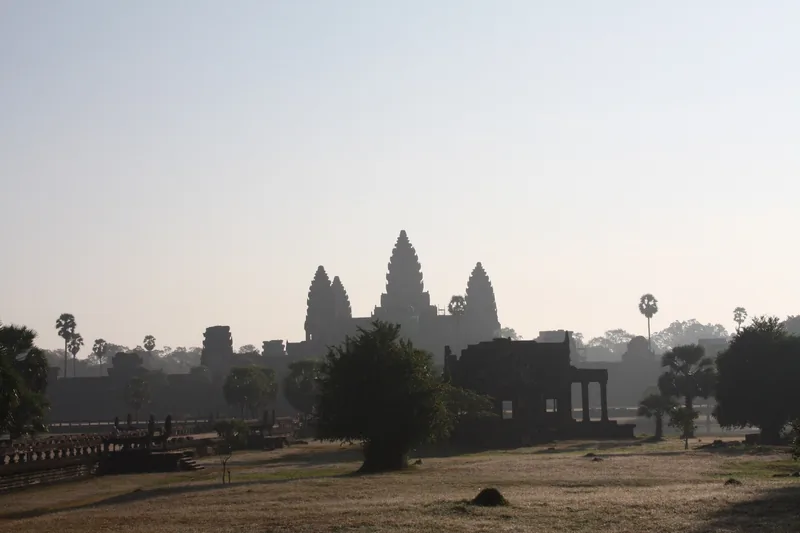
Start planning
Tell us about the trip you have in mind
Dates, party size and the places you care about are enough to start. You get a draft route and an indicative price, not a brochure.