 Heritage journeys of Indochina
Destinations · Laos
Luang Prabang: a town of working monasteries
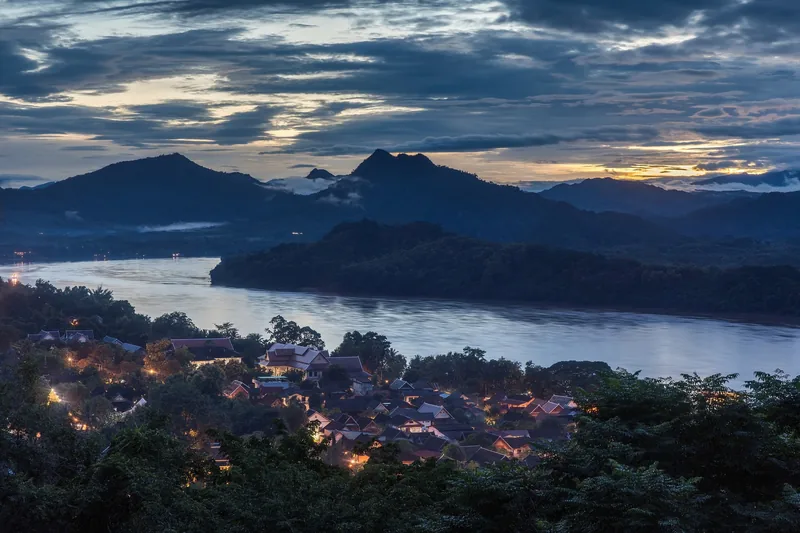
A small royal town on a peninsula between the Mekong and the Nam Khan, inscribed by UNESCO in 1995 for the way its Lao monasteries and wooden houses sit alongside the brick and stucco of the colonial era.
Luang Prabang at a glance
What Luang Prabang actually is
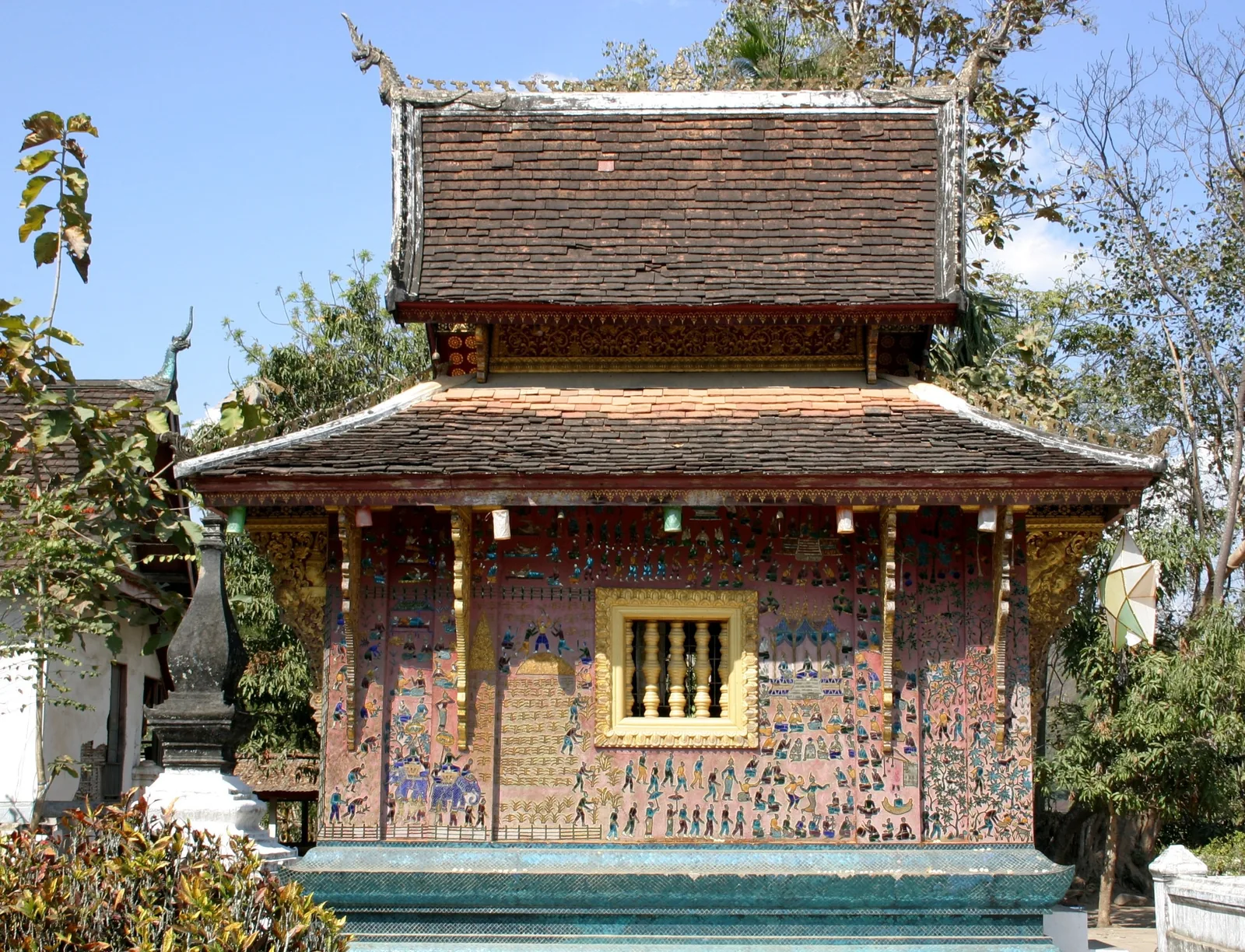
The UNESCO town is the whole peninsula where the Nam Khan joins the Mekong, small enough to cross comfortably on foot. What it protects is a mixture: Lao monasteries with steep layered roofs, wooden houses on stilts, and the brick-and-stucco shophouses and villas built under the French. UNESCO describes it as an outstanding example of the fusion of those two traditions, and the town has kept both.
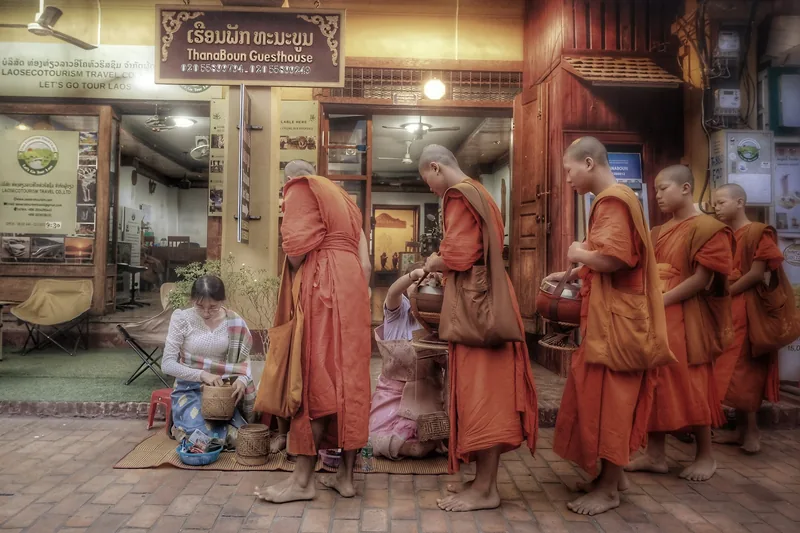
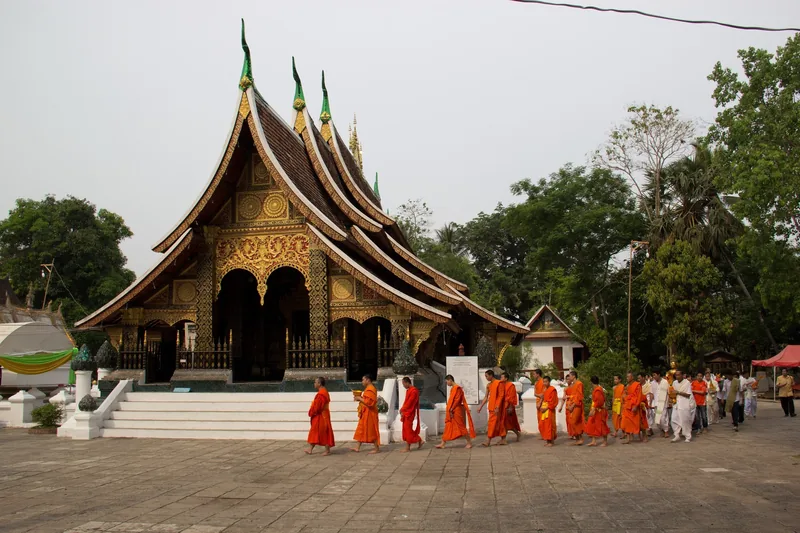
The difference from Angkor or My Son is that the monasteries are not monuments but working houses of monks. Wat Xieng Thong, from the sixteenth century, is the one UNESCO singles out for its architecture; dozens of others are in daily use. That brings obligations. The morning alms round, when monks walk the streets to receive sticky rice, has become a spectacle for visitors, and the Laos Tourism Board publishes rules for watching it: from across the road, without flash, without following the procession.
The honest downside: the old town is now very largely hotels, guesthouses and cafés, and the night market is aimed at visitors. The town is quiet compared with Hoi An, but it is a tourist town, and it helps to know that before you arrive.
How many nights
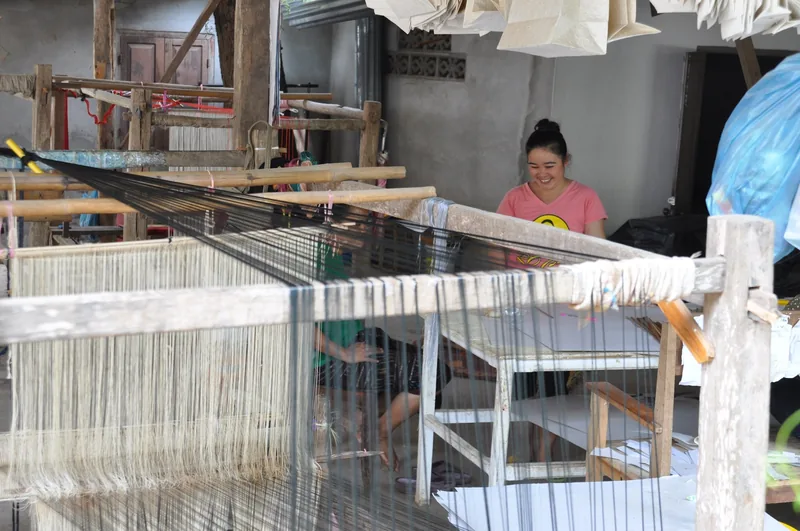
Three nights gives one day for the monasteries and the Royal Palace Museum, one for the weaving and paper-making villages and the river, and a morning for the alms round or Mount Phousi. Two nights works but compresses the museum, which closes for lunch, into a tight morning. Four nights lets you add a day on the Mekong upstream.
When to go
3 = ideal · 2 = good · 1 = difficult. Cool and dry November to February; smoke haze common in March and April; rain from May to October.
November to February is the cool, dry season, with chilly mornings in December and January. In March and April, field burning across northern Laos often hazes the air for weeks. The rains run from about May to October and turn the hills green; the town is quieter and the river high.
Getting there
- By air: Luang Prabang airport, about 15 minutes from the old town, has flights from Bangkok, Hanoi and other regional cities; routings vary by season.
- By train: the line from Vientiane covers 238 km in roughly two hours, with some trains stopping at Vang Vieng. Tickets are sold three days ahead through the official app or at stations.
- To the Plain of Jars: about eight hours by road to Phonsavan, or by air via Vientiane.
Sources: Wikipedia — Luang Prabang–Vientiane intercity train; Hobomaps — Laos–China Railway information · checked .
What it costs on the ground
The Royal Palace Museum charges 30,000 kip; most monasteries ask a small entry fee or a donation. The museum requires shoulders and knees covered (traditional dress can be rented) and does not allow photography or bags inside. Check before you travel. Hotels in historic buildings in the old town are the dearest rooms in the town; well-run hotels a short walk outside cost noticeably less.
Sources: Discover Laos (Laos Tourism Board) — Royal Palace Museum; Discover Laos (Laos Tourism Board) — alms giving · checked .
When to skip Luang Prabang
- If you want nightlife. The town goes to bed early.
- If your dates are in March or April and you are sensitive to smoke.
- If you expect somewhere undiscovered. It is well known and well visited; its charm is in its scale and its daily religious life, not its remoteness.
Luang Prabang in pictures
Journeys that visit Luang Prabang
Three nights on Luang Prabang, the Plain of Jars and Vat Phou, and three at the end of the UNESCO Indochina fifteen days. Before the alms round, read the section on Laos in our temple etiquette guide.
Common questions
Questions travellers ask most
Should we join the alms round?
Watching quietly from across the street is fine and is what most visitors do. If you give, buy rice at the morning market, dress modestly, and stay silent.
Is the Royal Palace Museum open every day?
It closes at lunchtime and one day a week. We check the current closing day before your visit.
Can we visit monasteries in the afternoon?
Yes. Many are open through the day, and late afternoon is often quieter than mid-morning.
Is three nights too many?
Not if you like slow places. If you prefer a busier pace, two nights covers the main sites.
Related
Read next
Example journey
Laos heritage 8 days
The three Lao World Heritage listings in eight days.
View this journey
Example journey
UNESCO Indochina 15 days
Fifteen days, three countries, eight UNESCO listings, privately guided.
View this journey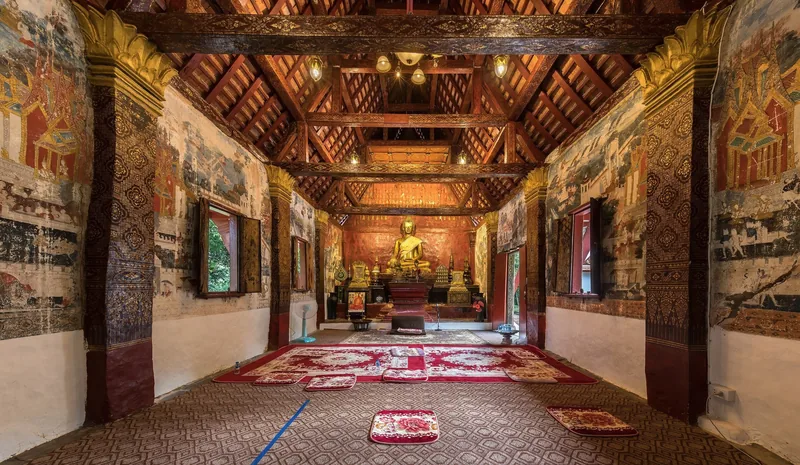
Etiquette
Temple etiquette
Dress and conduct at the religious and royal sites of the region.
View this journey
Heritage table
UNESCO heritage sites
All seventeen World Heritage properties, with years, hours and tickets.
View this journey
Tours · Prices
Prices
What a quote contains, what moves it, and the site tickets we can source.
View this journey
Destinations
Destinations
The four heritage places our journeys are built around.
View this journey
Start planning
Tell us about the trip you have in mind
Dates, party size and the places you care about are enough to start. You get a draft route and an indicative price, not a brochure.